#include <PolyEdge.h>
Public Types | |
| using | Unique = std::unique_ptr<PolyEdge> |
| Unique pointer. | |
| using | Shared = std::shared_ptr<PolyEdge> |
| Shared pointer. | |
| using | Option = std::optional<PolyEdge> |
| Optional. | |
Public Member Functions | |
| PolyEdge () | |
| PolyEdge (const Point &origin, const PolyPoint &end) | |
| PolyEdge (const Point &origin, const Point &end, double radius, Rotation rotation=anticlockwise, double prec=math::eps) | |
| PolyEdge (const Arc &arc) | |
| bool | operator== (const PolyEdge &ref) const |
| The normal to the plane the edge is aligned to (vertical by default) | |
| bool | operator!= (const PolyEdge &ref) const |
| PolyEdge & | operator= (const PolyEdge &source) |
| PolyEdge | operator+ (const Point &offset) const |
| PolyEdge & | operator+= (const Point &offset) |
| PolyEdge | operator- (const Point &offset) const |
| PolyEdge & | operator-= (const Point &offset) |
| PolyEdge | operator* (double scale) const |
| PolyEdge & | operator*= (double scale) |
| PolyEdge | operator* (const Matrix3x3 &matrix) const |
| PolyEdge & | operator*= (const Matrix3x3 &matrix) |
| bool | isArc (double prec=math::eps) const |
| bool | isEqual2D (const PolyEdge &ref, double prec=math::eps) const |
| bool | isEqual3D (const PolyEdge &ref, double prec=math::eps) const |
| bool | isColinearTo2D (const PolyEdge &ref, double prec=math::eps) const |
| bool | isColinearTo3D (const PolyEdge &ref, double prec=math::eps) const |
| bool | isParallelTo2D (const PolyEdge &ref, double prec=math::eps) const |
| bool | isParallelTo3D (const PolyEdge &ref, double prec=math::eps) const |
| bool | isTangentialTo2D (const PolyEdge &ref, double prec=math::eps, double anglePrec=math::epsAngle) const |
| double | getRadius (bool isSigned=false) const |
| double | getSweep () const |
| double | azimuthAngle () const |
| double | altitudeAngle () const |
| double | startTangent () const |
| double | endTangent () const |
| double | getTangentAt (const Point &ref) const |
| Point | centre () const |
| Point | midpoint () const |
| double | getArea (bool isResultSigned=false) const |
| double | length2D () const |
| double | length3D () const |
| std::optional< Arc > | asArc (double prec=math::eps) const |
| Point | closestPointTo2D (const Point &ref, double prec=math::eps) const |
| Point | closestPointTo3D (const Point &ref, double prec=math::eps) const |
| Point | closestPointAlong2D (const Point &ref, double prec=math::eps) const |
| Point | closestPointAlong3D (const Point &ref, double prec=math::eps) const |
| vertex_index | intersectionWith2D (const PolyEdge &ref, XList &inter, double prec=math::eps) const |
| vertex_index | intersectionWith3D (const PolyEdge &ref, XList &inter, double prec=math::eps) const |
| Position | positionOf2D (const Point &ref, double prec=math::eps) const |
| Position | positionOf3D (const Point &ref, double prec=math::eps) const |
| bool | encloses2D (const Point &ref, double prec=math::eps) const |
| bool | encloses3D (const Point &ref, double prec=math::eps) const |
| bool | overlaps2D (const PolyEdge &ref, double prec=math::eps) const |
| void | setRadius (double radius, std::optional< Rotation > rotation=std::nullopt, double prec=math::eps) |
| void | setSweep (double sweep) |
| void | stretchOrigin (const Point &pt, bool canInvert=true, double prec=math::eps) |
| void | stretchEnd (const Point &pt, double prec=math::eps) |
| void | setBaseLevel (double z=0.0) |
| void | offset (double shift) |
| void | extend (double len, bool byEnd=true) |
| void | extend (const Point &ref, bool byEnd=true) |
| void | split (const Point &pos, PolyEdge &offcut, bool keepOrig=true) |
| void | movePolar (double len, double azim, double alt) |
| void | movePolar (double len, double angle) |
| PolyEdge & | flip () |
Public Attributes | |
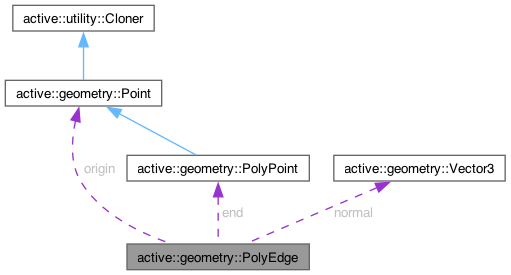
| Point | origin |
| The edge origin. | |
| PolyPoint | end |
| The edge end. | |
| Vector3 | normal = Vector3(0.0, 0.0, 1.0) |
| The normal to the plane the edge lies in. | |
Detailed Description
Class to represent an edge (curved or straight)
Constructor & Destructor Documentation
◆ PolyEdge() [1/4]
|
inline |
Constructor
◆ PolyEdge() [2/4]
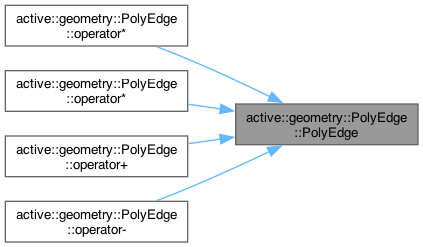
Constructor
- Parameters
-
origin Origin point of the edge end End point of the edge
◆ PolyEdge() [3/4]
| PolyEdge::PolyEdge | ( | const Point & | origin, |
| const Point & | end, | ||
| double | radius, | ||
| Rotation | rotation = anticlockwise, | ||
| double | prec = math::eps ) |
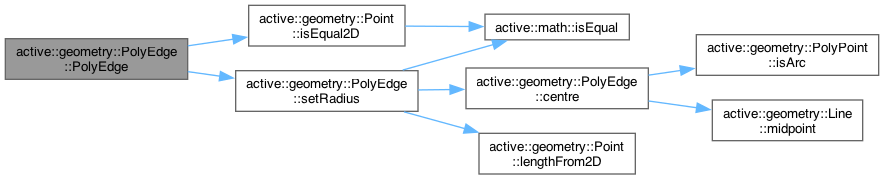
Constructor
- Parameters
-
origin Origin point of the edge end End point of the edge radius The edge radius (sign indicates arc centre side (+ve = right, -ve = left, 0 = linear) rotation The rotation direction of the edge prec The required precision
◆ PolyEdge() [4/4]
| PolyEdge::PolyEdge | ( | const Arc & | arc | ) |
Constructor
- Parameters
-
arc An arc describing the poly-edge
Member Function Documentation
◆ altitudeAngle()
| double PolyEdge::altitudeAngle | ( | ) | const |
Get the altitude angle of the edge
- Returns
- The altitude angle


◆ asArc()
| Arc::Option PolyEdge::asArc | ( | double | prec = math::eps | ) | const |
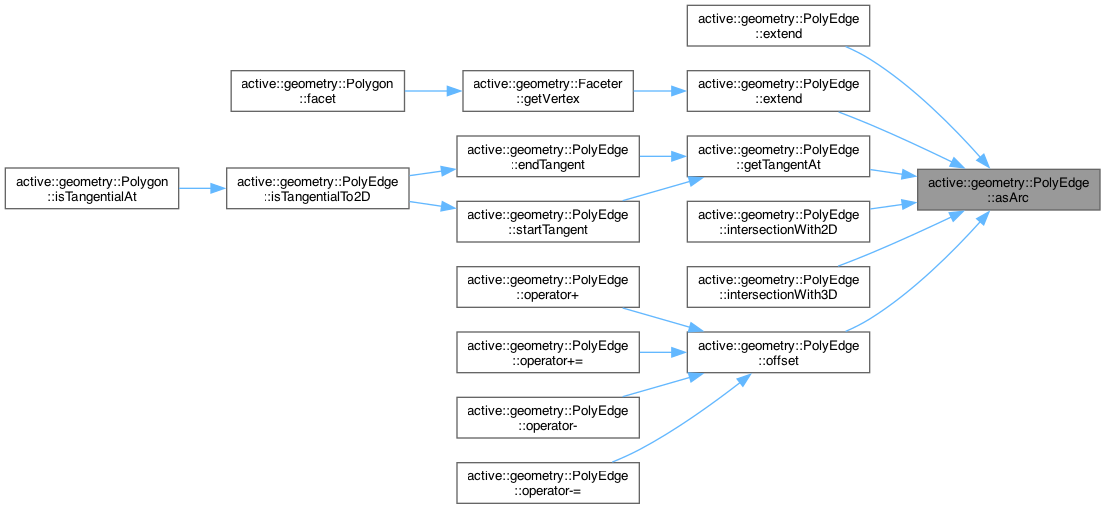
Get the edge as an arc
- Parameters
-
prec The required precision
- Returns
- The edge as an arc (nullopt if the edge is not an arc)

◆ azimuthAngle()
| double PolyEdge::azimuthAngle | ( | ) | const |
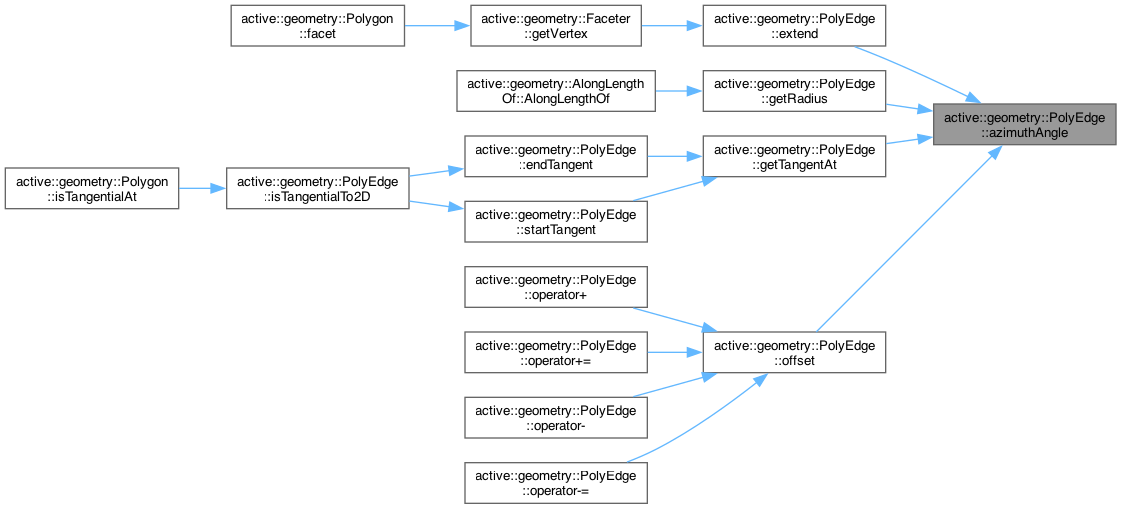
Get the azimuth angle of the edge
- Returns
- The azimuth angle

◆ centre()
| Point PolyEdge::centre | ( | ) | const |
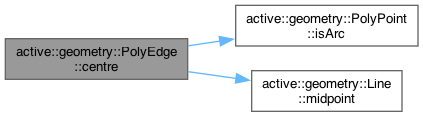
Get the center of the edge
- Returns
- The edge centre (centre of arc or midpoint of straight line)

◆ closestPointAlong2D()
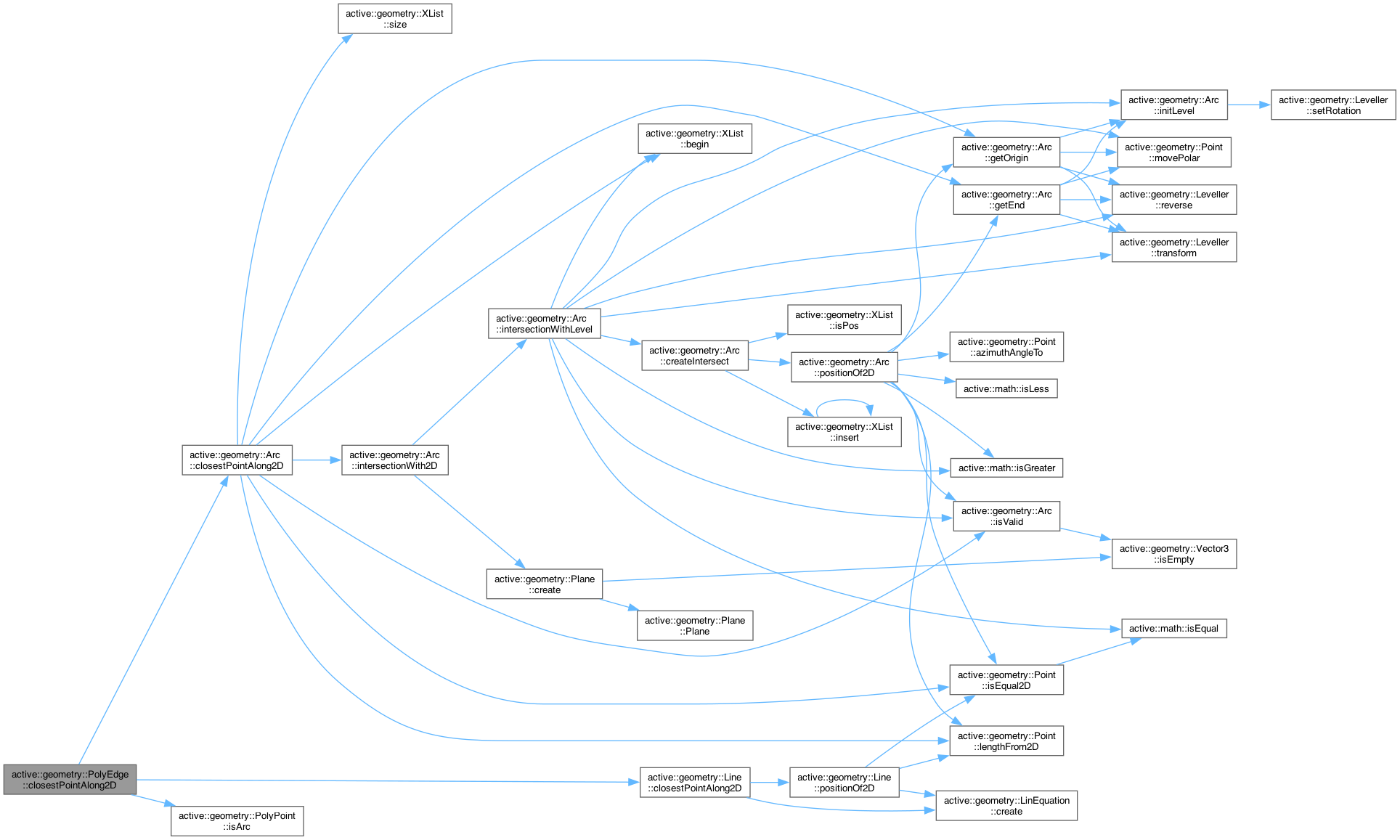
Get the closest point along the edge to a given point in 2D
- Parameters
-
ref The reference point
- Returns
- The closest point along the edge to the reference point

◆ closestPointAlong3D()
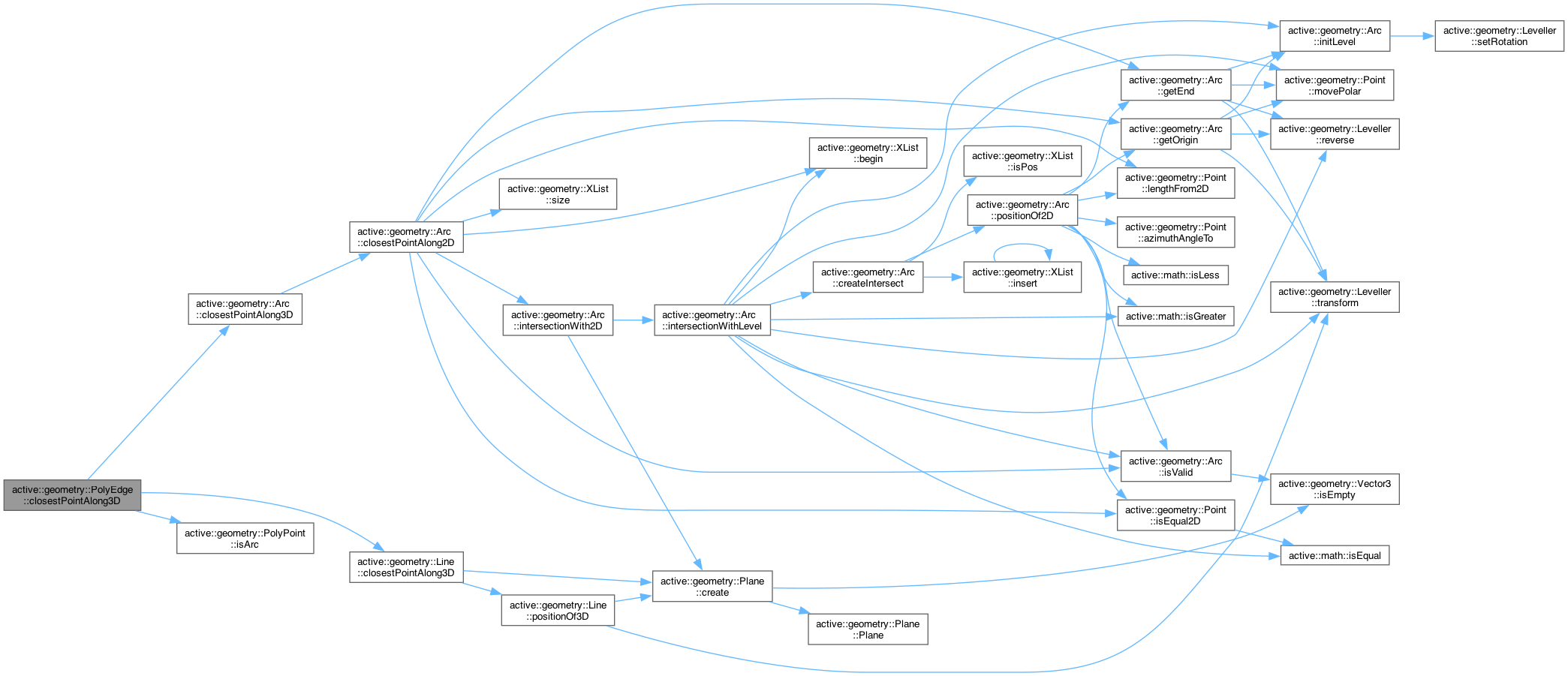
Get the closest point along the edge to a given point
- Parameters
-
ref The reference point
- Returns
- The closest point along the edge to the reference point
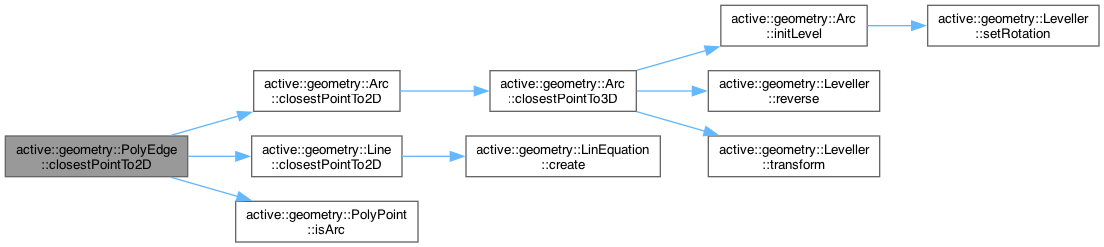
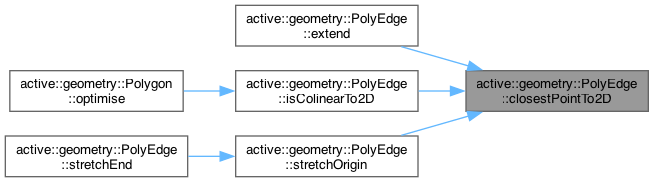
◆ closestPointTo2D()
Get the closest point in the edge to a given point in 2D
- Parameters
-
ref The reference point
- Returns
- The closest point in the edge to the reference point
◆ closestPointTo3D()
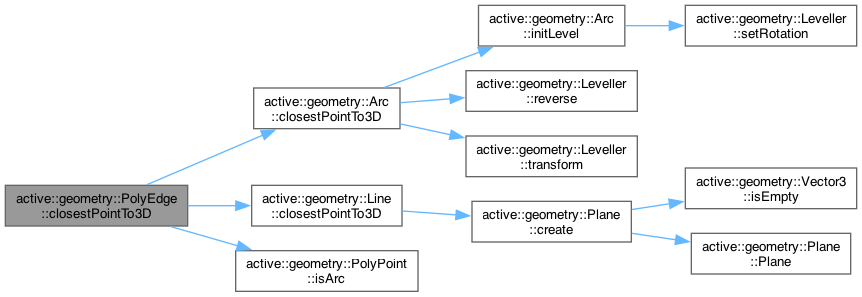
Get the closest point in the edge to a given point
- Parameters
-
ref The reference point
- Returns
- The closest point in the edge to the reference point

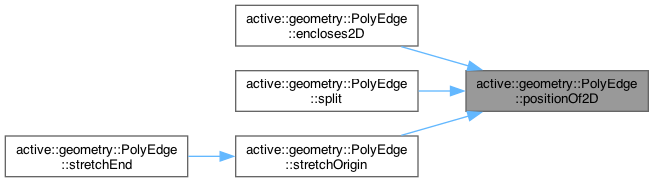
◆ encloses2D()
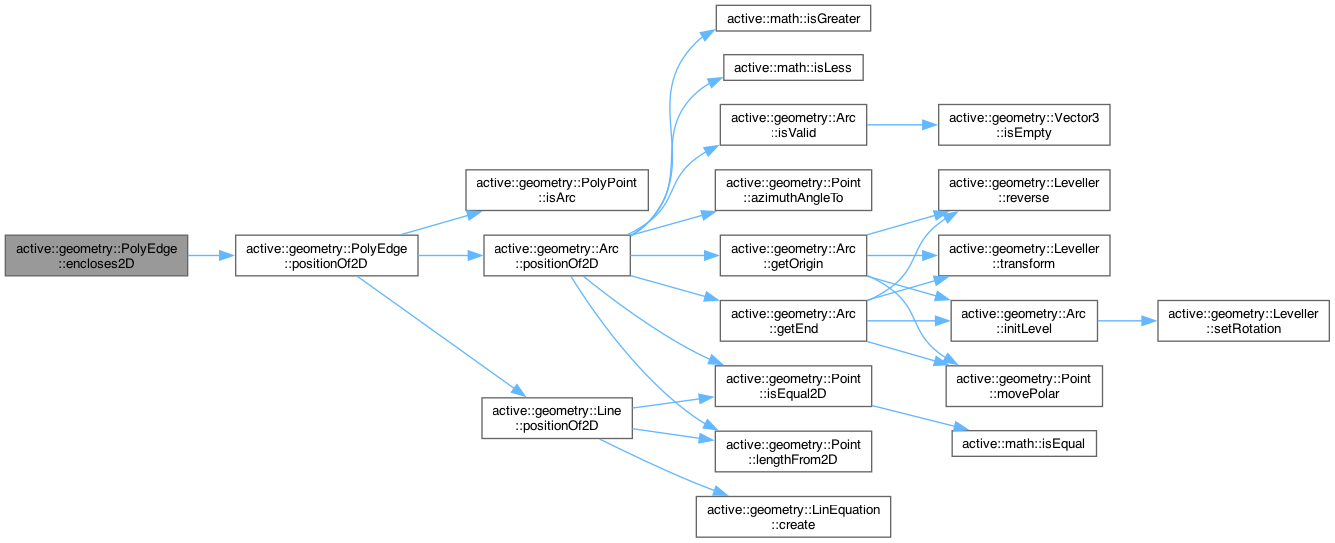
Determine if a point is enclosed by a edge in 2D
- Parameters
-
ref The reference point prec The required precision
- Returns
- True if the edge encloses the point
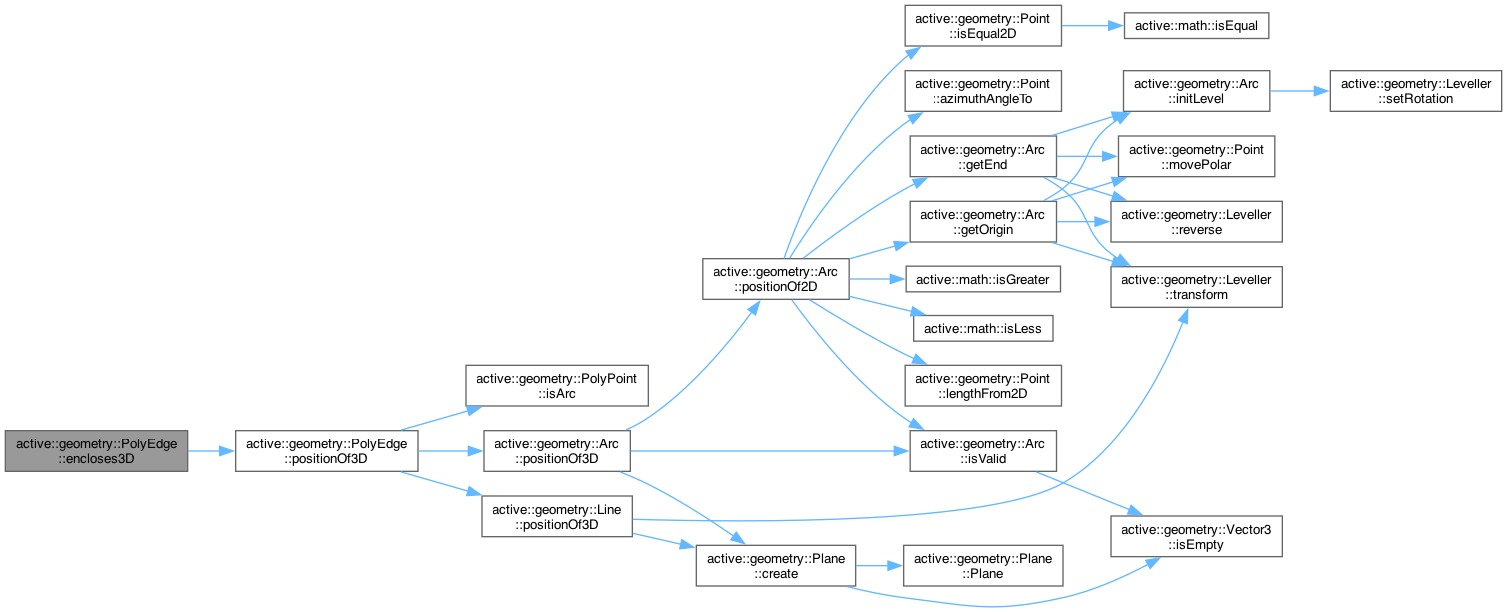
◆ encloses3D()
Determine if a point is enclosed by a edge
- Parameters
-
ref The reference point
- Returns
- True if the edge encloses the point
◆ endTangent()
| double PolyEdge::endTangent | ( | ) | const |
Get the tangent angle at the edge end
- Returns
- The end tangent angle


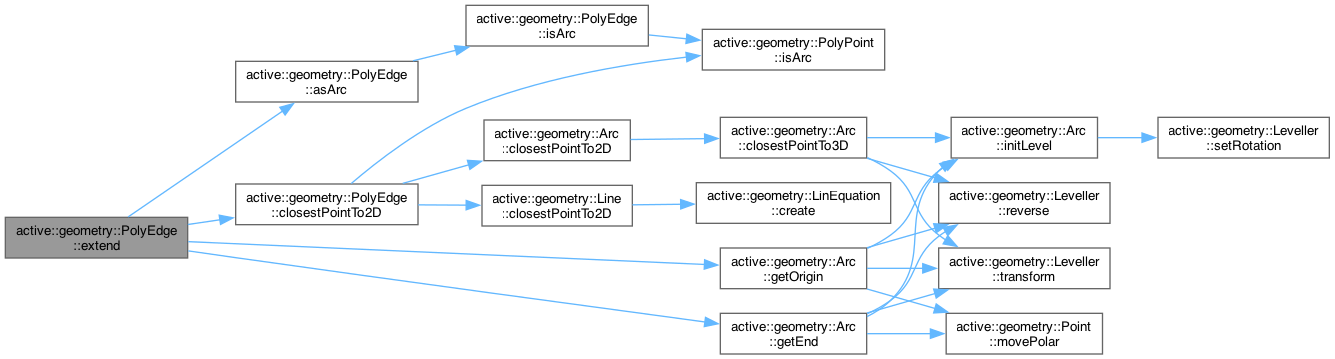
◆ extend() [1/2]
| void PolyEdge::extend | ( | const Point & | ref, |
| bool | byEnd = true ) |
Extend the edge to the point nearest te specified point
- Parameters
-
ref The point to extend to byEnd True to extend the edge by the endpoint
◆ extend() [2/2]
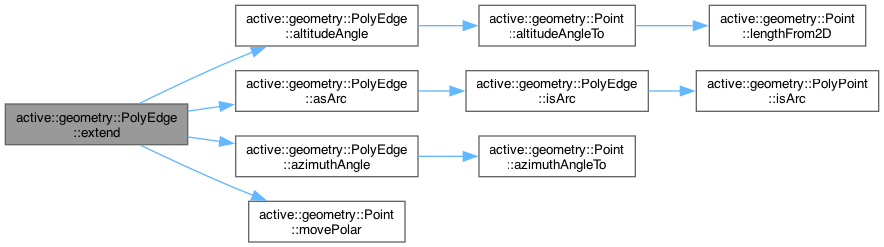
| void PolyEdge::extend | ( | double | len, |
| bool | byEnd = true ) |
Extend the edge length by the specified amount It is also possible to shorten the edge or to set len to negative values. If the edge is an arc, it cannot be extended further than to a full circle, both to the positive and to the negative direction.
- Parameters
-
len The amount to extend the edge by byEnd True to extend the edge by the endpoint

◆ flip()
| PolyEdge & PolyEdge::flip | ( | ) |
Flip the edge

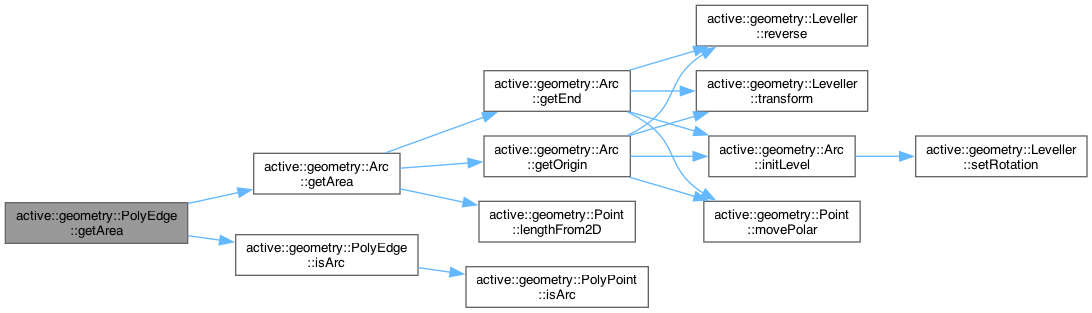
◆ getArea()
| double PolyEdge::getArea | ( | bool | isResultSigned = false | ) | const |
Get the edge area (line edges are always zero)
- Parameters
-
isResultSigned True if the result should be signed (reflecting the arc angle)
- Returns
- The edge area

◆ getRadius()
| double PolyEdge::getRadius | ( | bool | isSigned = false | ) | const |
Get the radius of the edge
- Parameters
-
isSigned True if the radius should be signed for the side of arc centres (left = -ve, right = +ve)
- Returns
- The radius of the edge (0 = straight edge)


◆ getSweep()
|
inline |
Get the edge sweep angle
- Returns
- The edge sweep angle (0.0 = straight line)
◆ getTangentAt()
| double PolyEdge::getTangentAt | ( | const Point & | ref | ) | const |
Get the tangent angle at the specified point
- Parameters
-
ref The reference point
- Returns
- The tangent angle at the specified point


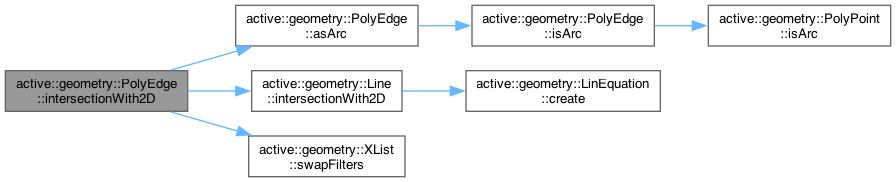
◆ intersectionWith2D()
| vertex_index PolyEdge::intersectionWith2D | ( | const PolyEdge & | ref, |
| XList & | inter, | ||
| double | prec = math::eps ) const |
Get the intersection point of two edges in 2D
- Parameters
-
ref The reference edge inter The intersection list to populate prec The required precision
- Returns
- The number of intersections calculated
◆ intersectionWith3D()
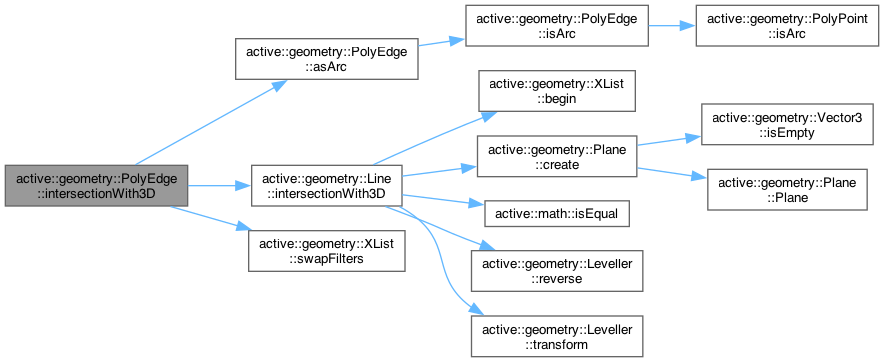
| vertex_index PolyEdge::intersectionWith3D | ( | const PolyEdge & | ref, |
| XList & | inter, | ||
| double | prec = math::eps ) const |
Get the intersection point of two edges in 3D
- Parameters
-
ref The reference edge inter The intersection list to populate prec The required precision
- Returns
- The number of intersections calculated
◆ isArc()
|
inline |
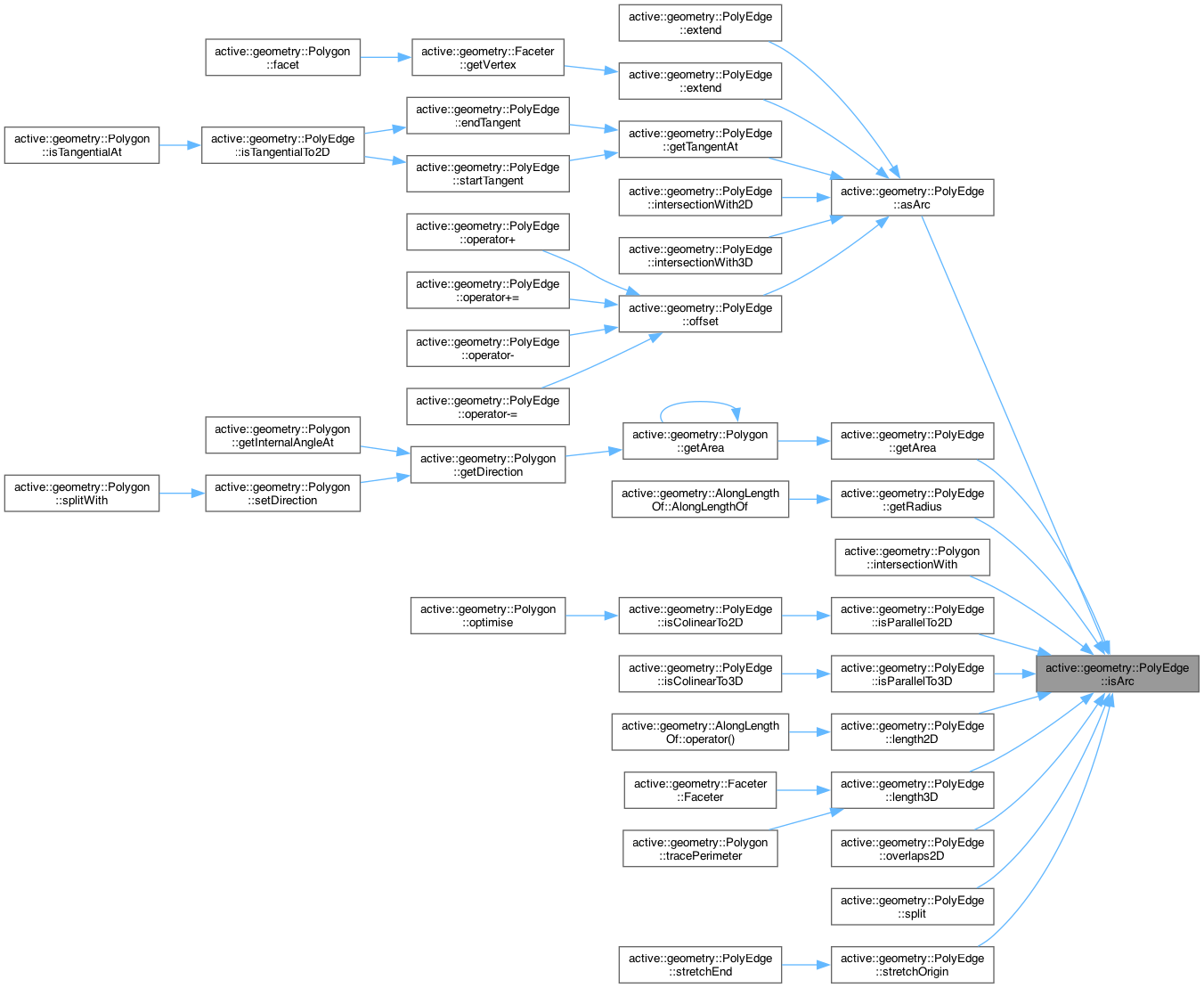
Determine if the edge is an arc
- Returns
- True if the edge is an arc

◆ isColinearTo2D()
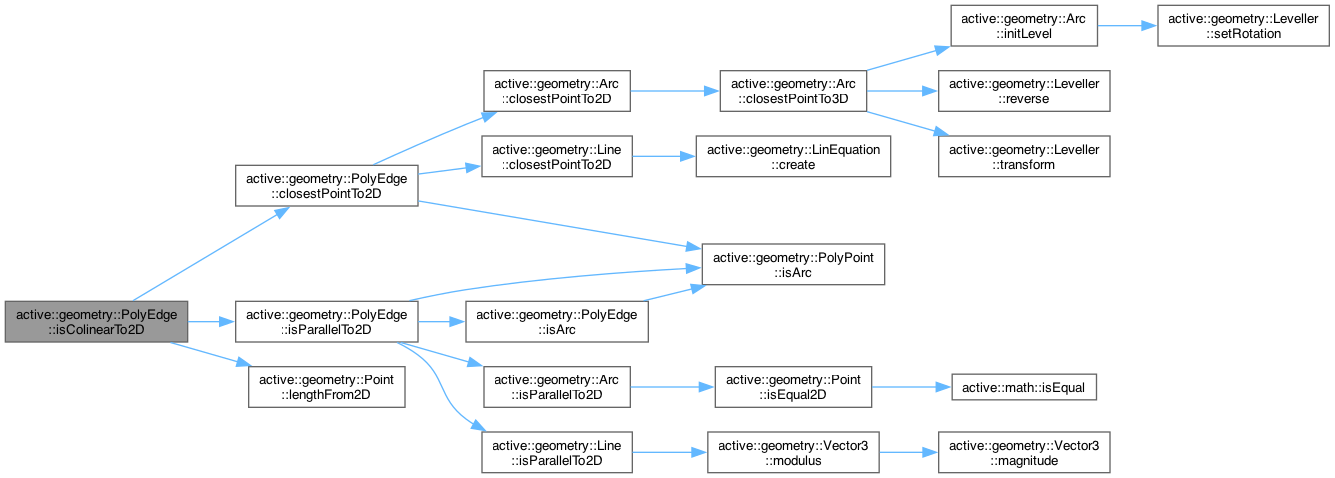
Check if two edges are colinear
- Parameters
-
ref The reference edge prec The required precision
- Returns
- True if the edges are colinear

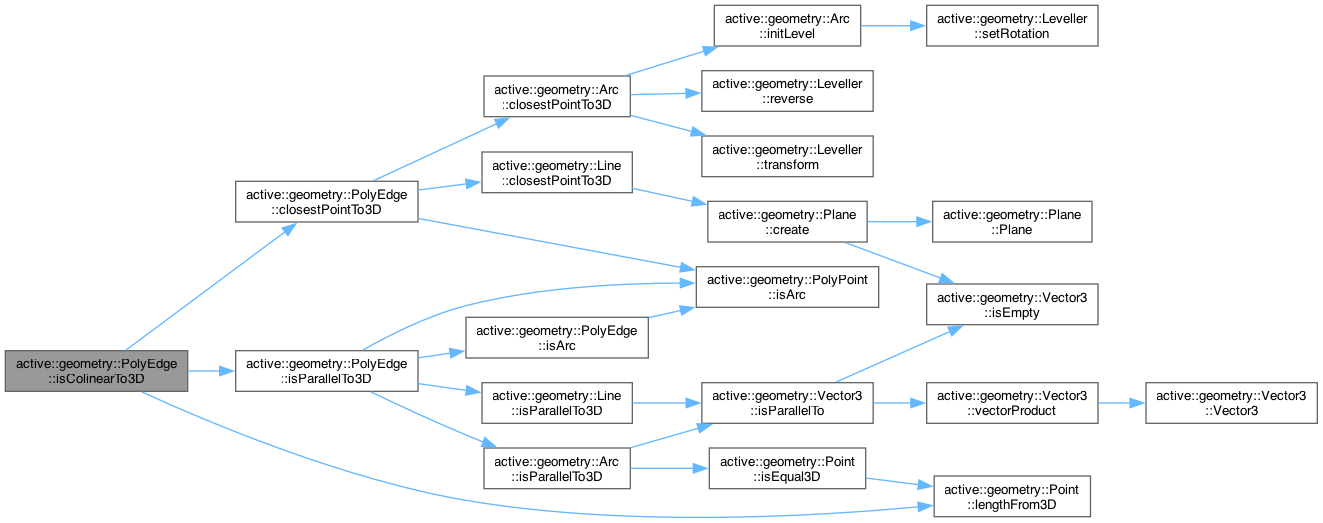
◆ isColinearTo3D()
Check if two edges are colinear
- Parameters
-
ref The reference edge
- Returns
- True if the edges are colinear
◆ isEqual2D()
Determine if two edges are equal in 2D
- Parameters
-
ref The edge to compare with this prec The required precision
- Returns
- True if the edges are identical

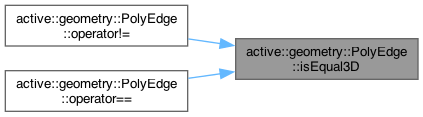
◆ isEqual3D()
Determine if two edges are equal
- Parameters
-
ref The edge to compare with this prec The required precision
- Returns
- True if the edges are identical

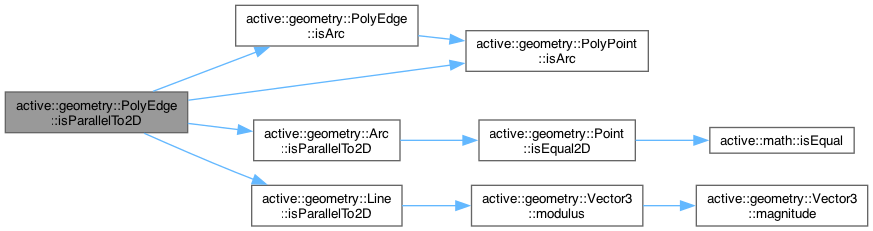
◆ isParallelTo2D()
Check if two edges are parallel
- Parameters
-
ref The reference edge prec The required precision
- Returns
- True if they are parallel

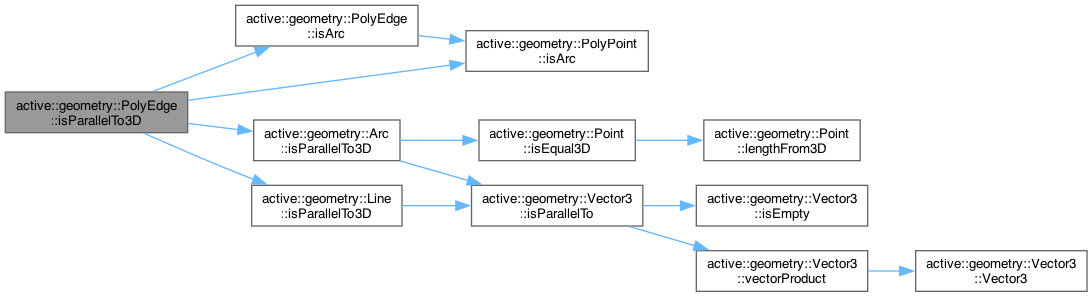
◆ isParallelTo3D()
Check if two edges are parallel
- Parameters
-
ref The reference edge
- Returns
- True if the edges are parallel

◆ isTangentialTo2D()
| bool PolyEdge::isTangentialTo2D | ( | const PolyEdge & | ref, |
| double | prec = math::eps, | ||
| double | anglePrec = math::epsAngle ) const |
Check if two edges are tangential (i.e. the end tangent of the reference edge matches the start tangent of this edge)
- Parameters
-
ref The reference edge prec The coordinate precision anglePrec The angle precision
- Returns
- True if the edges are tangential


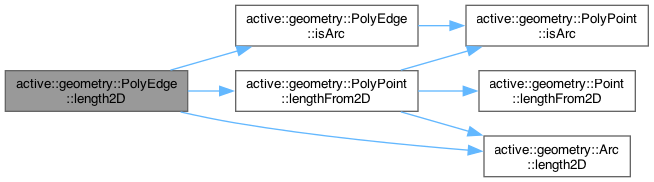
◆ length2D()
| double PolyEdge::length2D | ( | ) | const |
Get the length of the edge in 2D
- Returns
- The 2D edge length

◆ length3D()
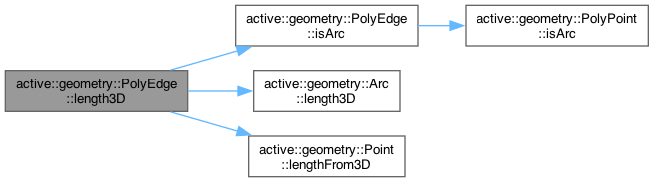
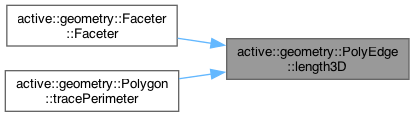
| double PolyEdge::length3D | ( | ) | const |
Get the length of the edge
- Returns
- The length of the edge
◆ midpoint()
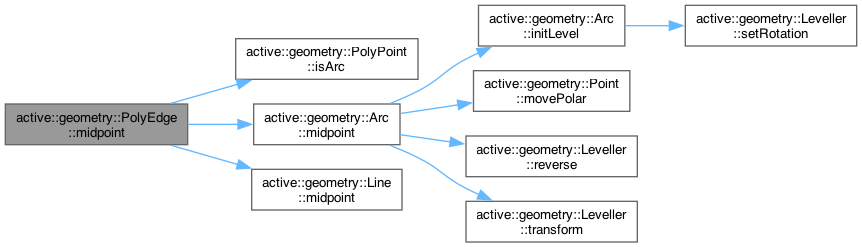
| Point PolyEdge::midpoint | ( | ) | const |
Get the midpoint of the edge
- Returns
- The midpoint of the edge

◆ movePolar() [1/2]
| void PolyEdge::movePolar | ( | double | len, |
| double | angle ) |
Move the edge by the specified distance and angle
- Parameters
-
len The distance to move the edge angle The angle to move the edge along

◆ movePolar() [2/2]
| void PolyEdge::movePolar | ( | double | len, |
| double | azim, | ||
| double | alt ) |
Move the edge by the specified distance and azimuth/altitude angles
- Parameters
-
len The distance to move the edge azim The azimuth angle to move the edge along alt The altitude angle to move the edge along

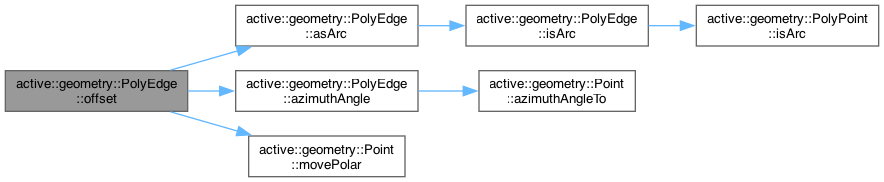
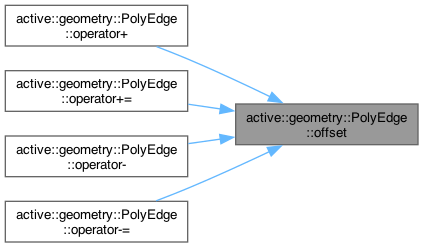
◆ offset()
| void PolyEdge::offset | ( | double | shift | ) |
Offset the edge by the specified amount
- Parameters
-
shift The amount to offset the edge by
◆ operator!=()
|
inline |
Inequality operator
- Parameters
-
ref The edge to compare with this
- Returns
- True if the edges are different

◆ operator*() [1/2]
Multiplication operator
- Parameters
-
matrix The matrix to multiply the edge by
- Returns
- A multiplied edge

◆ operator*() [2/2]
| PolyEdge PolyEdge::operator* | ( | double | scale | ) | const |
Multiplication operator
- Parameters
-
scale The amount to multiply the edge by
- Returns
- A multiplied edge

◆ operator*=() [1/2]
Multiplication with assignment operator
- Parameters
-
matrix The matrix to multiply the edge by
- Returns
- A reference to this
◆ operator*=() [2/2]
| PolyEdge & PolyEdge::operator*= | ( | double | scale | ) |
Multiplication with assignment operator
- Parameters
-
scale The amount to multiply the edge by
- Returns
- A reference to this
◆ operator+()
Addition operator
- Parameters
-
offset The amount to add to the edge
- Returns
- An offset edge

◆ operator+=()
Addition with assignment operator
- Parameters
-
offset The amount to add to the edge
- Returns
- A reference to this

◆ operator-()
Subtraction operator
- Parameters
-
offset The amount to subtract from the edge
- Returns
- An offset edge

◆ operator-=()
Subtraction with assignment operator
- Parameters
-
offset The amount to subtract from the edge
- Returns
- A reference to this

◆ operator=()
Assignment operator
- Parameters
-
source The edge to be assigned to this
- Returns
- A reference to this edge
◆ operator==()
|
inline |
The normal to the plane the edge is aligned to (vertical by default)
Equality operator
- Parameters
-
ref The edge to compare with this
- Returns
- True if the edges are identical

◆ overlaps2D()
Determine if this edge is overlapped by a reference edge (a touching vertex is not an overlap)
- Parameters
-
ref The reference edge prec The required precision
- Returns
- True if the edge overlaps the reference edge

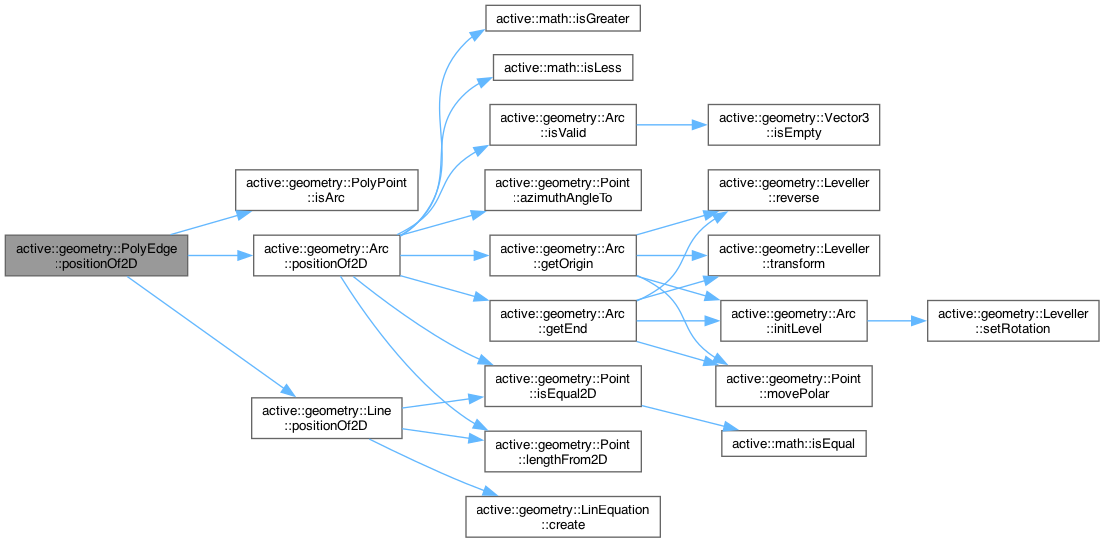
◆ positionOf2D()
Determine the relationship of a point to the edge in 2D
- Parameters
-
ref The point to test prec The required precision
- Returns
- The relative position of the point
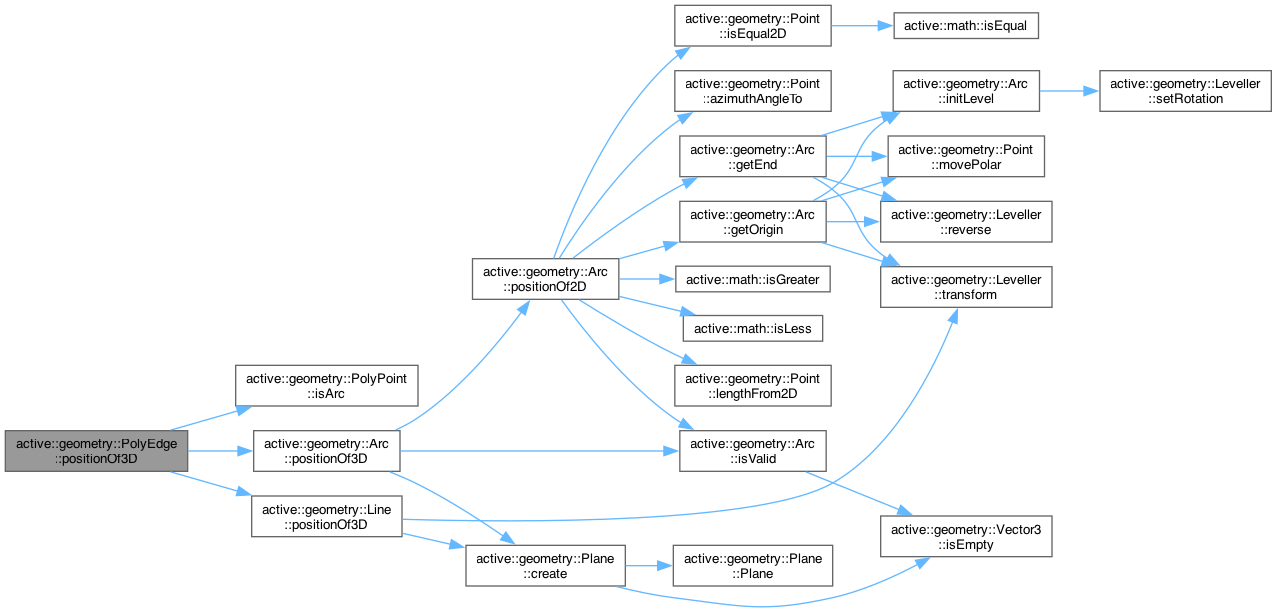
◆ positionOf3D()
Determine the relationship of a point to the edge in 3D
- Parameters
-
ref The point to test prec The required precision
- Returns
- The relative position of the point

◆ setBaseLevel()
| void PolyEdge::setBaseLevel | ( | double | z = 0.0 | ) |
Set the level (z coordinate) of the edge vertices
- Parameters
-
z The required level
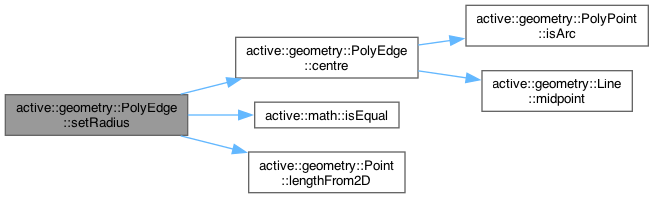
◆ setRadius()
| void PolyEdge::setRadius | ( | double | radius, |
| std::optional< Rotation > | rotation = std::nullopt, | ||
| double | prec = math::eps ) |
Set the edge radius
- Parameters
-
radius The edge radius (sign indicates arc centre side (+ve = right, -ve = left, 0 = linear) rotation The rotation direction of the edge (undefined = use existing, default = anticlockwise) prec The required precision

◆ setSweep()
|
inline |
Set the edge sweep angle
- Parameters
-
sweep The edge sweep angle (0.0 = straight line)
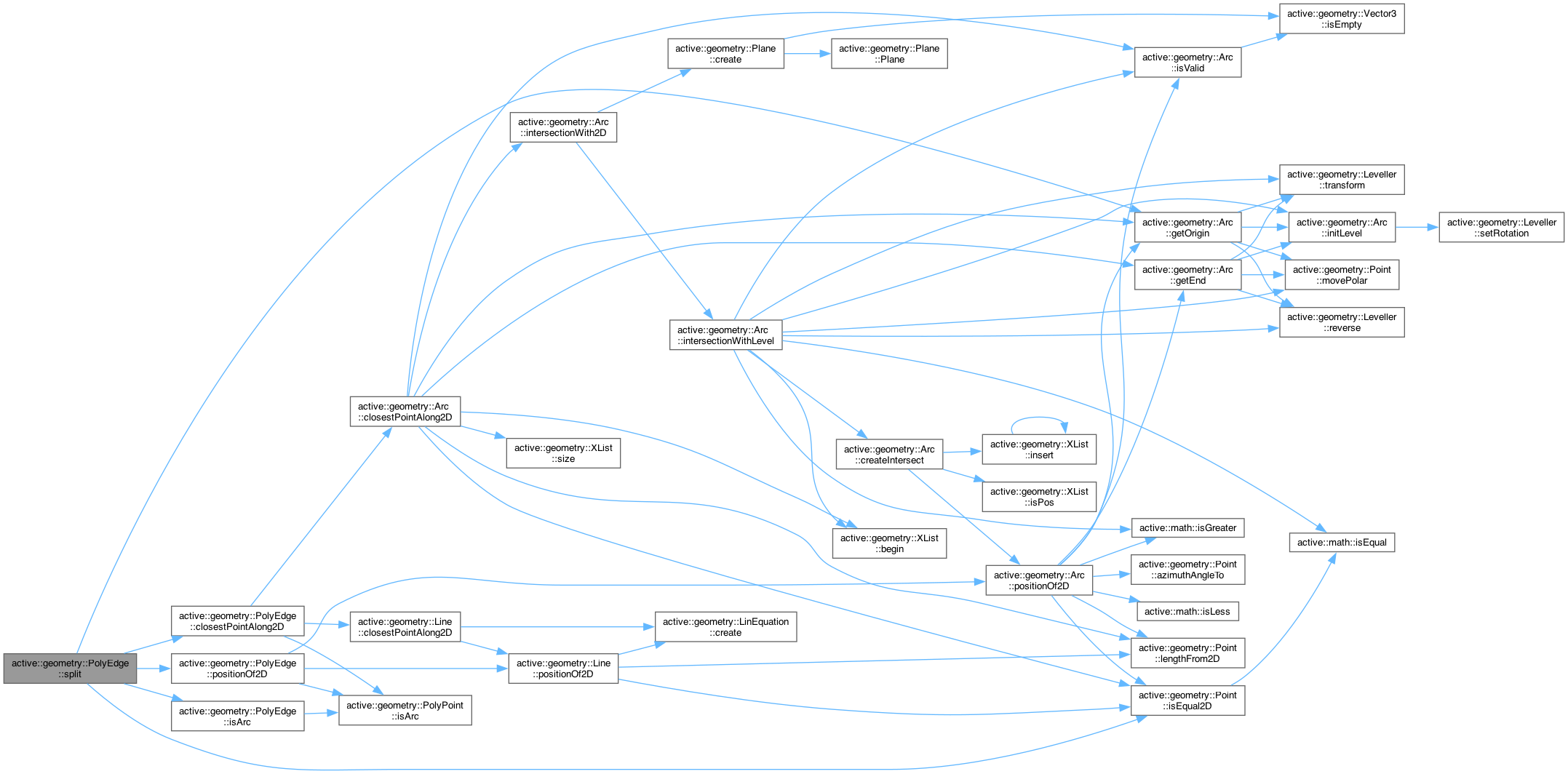
◆ split()
Split the edge at the specified point
- Parameters
-
pos The point to split the edge at offcut The offcut created by the split keepOrig True to maintain the edge origin
◆ startTangent()
| double PolyEdge::startTangent | ( | ) | const |
Get the tangent angle at the edge start
- Returns
- The start tangent angle


◆ stretchEnd()
Stretch the end point for this edge to the specified point
- Parameters
-
pt The point to stretch to
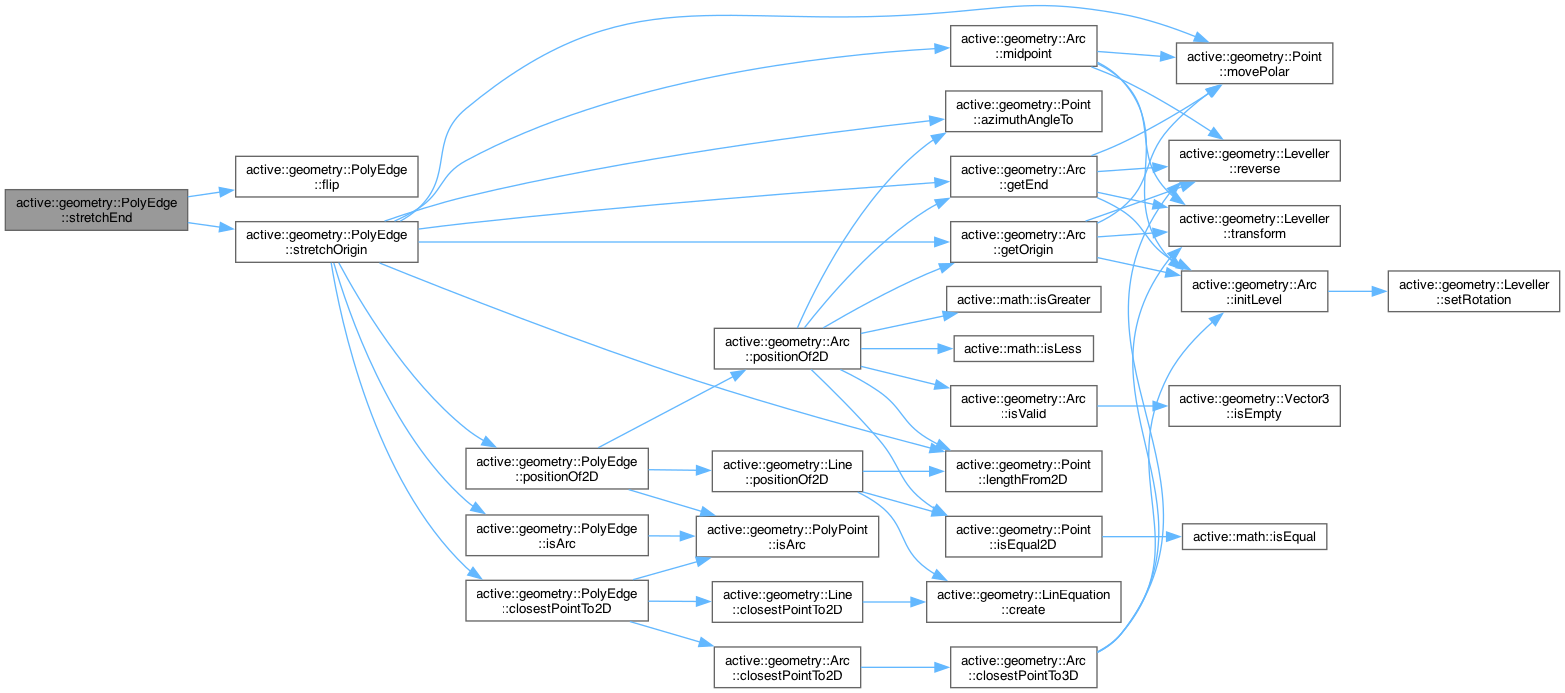
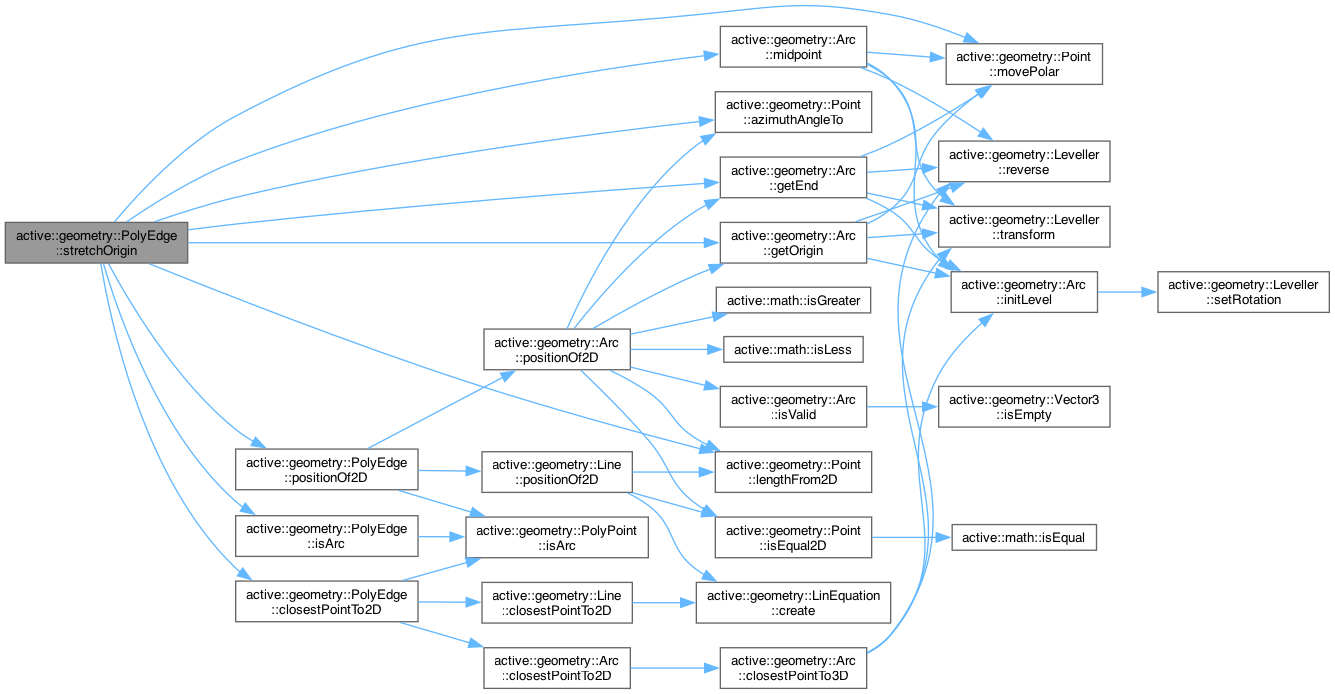
◆ stretchOrigin()
Stretch the origin point for this edge to the specified point
- Parameters
-
pt The point to stretch to canInvert True if the direction can be inverted

The documentation for this class was generated from the following files:
- /Users/rwessel/Documents/Development/ActiveLib/Active/Geometry/PolyEdge.h
- /Users/rwessel/Documents/Development/ActiveLib/Active/Geometry/PolyEdge.cpp